12 Benefits of Choosing a Modular Exhibition Booth For Your Next Home Design & Interior Exhibition

Key Takeaways

  • Modular booths offer unmatched flexibility, allowing easy reconfiguration for different home design and interior exhibition layouts.
  • Their reusable components significantly reduce long-term costs and support sustainable exhibiting practices.
  • Quick installation and dismantling save time, labour, and logistics effort—ideal for back-to-back events.
  • Fully customisable designs help brands refresh visual themes, colours, and décor to match each collection or season.
  • Scalable structures adapt to varying booth sizes while maintaining a cohesive brand presence.
  • Lightweight materials make transportation easier and cheaper compared to traditional custom-built booths.
  • Modular systems deliver a premium, modern aesthetic suitable for design-focused environments.
  • They seamlessly integrate digital screens, lighting, and interactive displays to boost visitor engagement.
  • Easy-to-update graphics and panels keep booths relevant for new campaigns or styling concepts.
  • Modular booths offer long-term ROI with repeat use while ensuring a consistently professional and attractive exhibition presence.

Introduction

Home design and interior exhibitions demand booths that grab attention and support real product demos. In practice, brands must show style, quality, and clear creative direction in limited floor space.

In fact, booths also need to be quick to install and adjust to shifting layouts between events. Many exhibitors now lean toward modular exhibition booths for these reasons.

In essence, modular exhibition booths tend to offer more flexibility, lower repeat costs, and steadier brand presentation. Thereby, balancing aesthetic appeal with practical usability to make a lasting impression on visitors.

This article seeks to explore the clear benefits modular booths offer, specifically tailored to the unique demands of the home and interior design industry. It also aims to help exhibitors optimise their event presence and engagement to maintain brand consistency across events.

What Is a Modular Exhibition Booth?

A modular exhibition booth is essentially a versatile exhibition structure. It’s made from interchangeable, lightweight components that can be easily reconfigured for different spaces.

In practice, modular exhibition booths’ pre-built panels and frame systems lock together without custom carpentry for each show. So, unlike custom-built booths built once per event, modular systems reuse the same components repeatedly. Thereby, allowing for rapid assembly and disassembly without specialised tools whilst appreciably cutting operational costs.

Modular booths are becoming more and more popular in design-focused exhibitions, such as home and interior shows. This is because of their high adaptability to different booth sizes, scalability for expanding displays, and capacity to match aesthetic industry requirements.

Why Modular Booths Are Ideal for Home & Interior Exhibitions?

Modular booths perfectly address the specific needs of home and interior design exhibitions by combining aesthetic appeal with functional flexibility. Generally, exhibitors in this industry require booths that showcase products elegantly with thoughtful space planning to accommodate décor and interactive displays.

In fact, modular exhibition systems simplify the process of changing themes and styles to keep up with seasonal trends or new collections. This consequently makes it easier to maintain fresh and engaging presentations.

Modular Exhibition Design Space Setup with Truss System

Additionally, these booths offer efficient layouts that optimise product visibility and visitor flow. These are critical considerations for high-impact exhibition experiences. Collectively, these adaptability characteristics support brand consistency across multiple exhibitions while accommodating the evolving demands of the home and interior market.

Scalable Modular Exhibition Design Booth

Key Benefits of Using a Modular Exhibition Booth

Modular exhibition booths offer a wealth of benefits perfectly suited to disparate exhibition verticals. Let’s explore some, shall we?

Benefits of Modular Exhibition Booths

1. Cost-Effective Without Compromising Quality

They are cost-effective without compromising quality. In fact, their reusability significantly lowers long-term exhibition expenses. As such, they are ideal for brands attending multiple home design fairs, offering an economical way to maintain a consistent brand presentation.

2. Quick Installation and Dismantling

The quick installation and dismantling capabilities of modular exhibition booths save valuable time and manpower. This is especially helpful for back-to-back exhibitions where logistics and setup efficiencies are critical to success. For instance, having smooth transitions between events.

3. Fully Customisable for Your Brand Style

These booths are fully customisable. In practice, they allow for easy switches in layouts, colour themes, and décor styles to match interior design aesthetics. This adaptability ensures a consistent yet dynamic presence, supported by custom layouts and custom designs tailored to the evolving trends of the home and interior market.

LED Screens Integrated in Modular Exhibition Setup

4. Scalable for Different Booth Sizes

Scalability is another key advantage. Modular booths allow exhibitors to expand or shrink their event structure using Truss Systems, depending on the exhibition hall or floor plan. This event scalability characteristic enables brands to adapt to different venues whilst optimising booth size for maximum impact. In turn, this helps exhibitors make the most of their exhibition budget and visitor engagement.

5. Reusable Design for Multiple Events

The reusable design of modular booths supports sustainable design practices. In fact, it offers an eco-friendly and budget-friendly option that aligns with modern business priorities.

This reusability not only appreciably reduces waste but also fits perfectly into long-term marketing schedules. It does so by providing a durable and reliable display solution that can evolve with the brand’s campaigns.

6. Lightweight and Easy to Transport

The lightweight materials employed in modular booths appreciably reduce logistics and setup costs and effort. This makes them convenient for exhibitors who participate in nationwide shows.

In fact, the easy setup capability, combined with low transport weight, addresses time constraints when assembling exhibition spaces in different locations.

7. Premium Look Suitable for Design Exhibitions

Modular booths offer a premium look that is well-suited to design exhibitions, featuring clean lines, modern panels, and seamless finishes. This sophisticated aesthetic supports the display of furniture, tiles, fabrics, lighting, cabinetry, and décor products.

8. Supports Digital & Interactive Intergration Displays

Modular exhibition booths integrate digital and interactive displays with ease, and are even able to integrate multiple LED Screens in Truss Systems.

Primarily, they allow exhibitors to incorporate screens, lighting systems, fabric graphics, and demo setups that captivate attendees. This capability enhances visitor engagement at exhibitions.

9. Environmentally Friendly Choice

Being environmentally friendly by design, modular booths employ reusable components to reduce waste and appeal to brands with sustainability messaging. Positively, their focus on reusable design promotes ethical marketing practices and resonates with eco-conscious audiences.

10. Easy to Update for New Campaigns or Collections

Updating modular booths for new campaigns or collections is simple and efficient. In practice, visuals can be flexibly swapped, new panels added, and product stories refreshed quickly to keep the display relevant for each event. This agility enables brands to stay aligned with market trends without the expense of booth redesign.

11. Perfect for Experiential Interiors

Modular booths allow experiential interior exhibitors to create walk-in environments, mini room setups, or sample interior spaces that demonstrate their products in real-life settings. This hands-on approach deepens visitor interaction and enhances the overall experience.

Also read: How to Create an Immersive Product Display with LED Screens at Your Exhibition Booth

12. Professional, Organised, and Clean Layout

They offer professional, organised, and clean layouts that hide wires, support shelving, and provide storage solutions. This attention to detail ensures a clutter-free presentation that keeps focus on the products and brand messaging.

How Modular Booths Compare to Traditional Custom-Built Booths?

Modular exhibition booths differ from traditional custom-built booths in different ways. Let’s illustrate how, shall we?

  • Cost breakdown differences: Modular booths have lower upfront and long-term costs due to reusable components and reduced fabrication needs. Custom-built booths demand higher initial investments from bespoke designs, premium materials, and labour.
  • Time and labour differences: Modular setups enable faster assembly and dismantling with tool-free components. Custom booths require longer design, production, and installation periods, with professional crews for complex elements.
  • Flexibility & reusability comparison: Modular booths flexibly allow reconfiguration, scalability, and reuse across events with minimal adjustments. Custom booths provide maximum one-time customisation but lack reusability.

Overall, modular booths suit frequent exhibitors, SMEs, or those prioritising budget and adaptability. For example, home design brands at multiple fairs. Contrarily, custom booths fit large brands seeking unique, immersive experiences for key flagship events.

Who Should Choose Modular Booths for Home Design Exhibitions?

Modular booths for home design exhibitions are well-suited to:

  • Interior designers showcasing sample rooms or style themes.
  • Renovation firms presenting before-and-after spaces.
  • Furniture brands with changing seasonal collections.
  • Lighting suppliers creating mood test zones.
  • Décor companies featuring artwork or textiles.
  • Material suppliers displaying tiles, paints, or flooring panels.
  • Smart home brands demonstrating connected home displays.

How to Maximise the Impact of Your Modular Booth: Tips

To maximise the impact of a modular booth, it’s important to:

  • Choose the right lighting: Identify LED spotlights and dynamic colour-changing lights to highlight products and create a suitable mood.
  • Utilise large-format fabric prints: Incorporate vibrant, high-resolution fabric prints for distance visibility.
  • Create interactive demo areas: Design zones with touchscreens, sample interactions, or live setups to engage visitors hands-on.
  • Highlight best-selling collections: Position top products at eye level with strategic shelving and backlighting.
  • Keep traffic flow in mind: Arrange modular elements to ensure wide aisles, clear pathways, and intuitive zoning.

Also read: Effective Exhibition Equipment Rental That Works Well With Your Event Budget.

Why Modular Booths Provide Long-Term Value?

Modular booths provide long-term value by delivering a strong ROI through their reusable and reconfigurable nature. Exhibitors can adapt the same components for varying booth sizes and designs. Thereby, maintaining brand consistency across multiple events.

This flexibility also reduces the cost and need for new builds while ensuring a professional presence that reinforces brand identity over time.

Overall, this characteristic makes them especially ideal for brands attending multiple exhibitions per year. Instead of investing repeatedly in custom booths, exhibitors benefit from the durability, adaptability, and efficient logistics of modular systems.

Conclusion

For home and interior design exhibitors, modular exhibition booths stand out due to their cost-effectiveness through reusability, speedy setup, and logistical efficiency. They also stand out for their scalability for event requirements and high-end aesthetic that complements product displays like lighting and furniture.

Additionally, these systems offer sustainability via reusable designs, easy updates for campaigns, and interactive digital integration that enhances visitor experiences at multiple shows.

Overall, investing in modular booth systems equips exhibitors with long-term value, flexibility, and ROI, ensuring a standout presence without repeated high costs. Explore Rental Supplier’s exhibition services in Malaysia for modular booth packages.
Utilising Visual Display & LED Screens in Your Launch Strategy

Key Takeaways

  • Visual displays like LED screens, video walls, and projection mapping turn product launches into immersive, memorable experiences.
  • Event display solutions help brands connect emotionally with audiences through impactful storytelling and real-time interactivity.
  • Choosing the right visual display unit (VDU)—pixel pitch, brightness, and aspect ratio—ensures clarity and professional quality.
  • Interactive display screens boost engagement by inviting participation, sharing, and audience feedback.
  • Proper planning, rigging, and power management prevent technical issues and keep displays running smoothly.
  • Partnering with a visual display artist merges creativity with technology for stunning, brand-aligned visuals.
  • Measure success through engagement data, social reach, and conversions to refine future launch strategies.

Introduction

In a world where attention spans are short and expectations are high, a successful product launch depends on how well you captivate your audience. Using visual display technology—such as LED screens for event launches, video walls, and interactive display screens—brands can transform ordinary unveilings into immersive, shareable experiences.

Modern event display solutions combine creativity and technology to highlight product features, tell brand stories, and build emotional connections. Whether it’s dynamic projection mapping, high-definition visual display units, or large-scale product AV launch equipment, these tools turn launches into memorable moments that drive engagement and visibility.

For companies seeking to stand out, investing in a powerful visual display strategy isn’t just an option—it’s an essential part of today’s launch playbook.

Why “Visual Display” Drives Better Product Launches?

A visual display isn’t just a backdrop—it’s a storytelling tool that influences how audiences perceive and remember your brand. Studies show that people retain up to 80% of what they see compared to just 20% of what they hear, proving why visual display solutions are vital for impactful product launches.

When brands integrate LED screens, video walls, or projection mapping into their launch strategy, they create an immersive environment that enhances emotional connection and message retention. High-quality visual display units help shape first impressions, highlight key features, and deliver the “wow” factor that traditional signage can’t match.

Moreover, modern audiences expect engagement, not observation. By incorporating interactive display screens—touch-enabled walls, motion-responsive visuals, or real-time social integrations—brands can invite participation, spark curiosity, and extend their reach through shareable moments.

Thus, effective use of visual displays transforms a launch from a presentation into an experience—one that excites, educates, and endures.

Event Display Solutions for Product Launches

Choosing the right event display solutions can make or break your launch impact. Today’s audiences expect more than a simple stage setup—they want visual energy, dynamic storytelling, and interactivity that makes them feel part of the event.

From LED screens for event launches to large-scale video walls and immersive projection mapping, each visual element serves a unique purpose in crafting that experience.

LED Screens for Event Launches

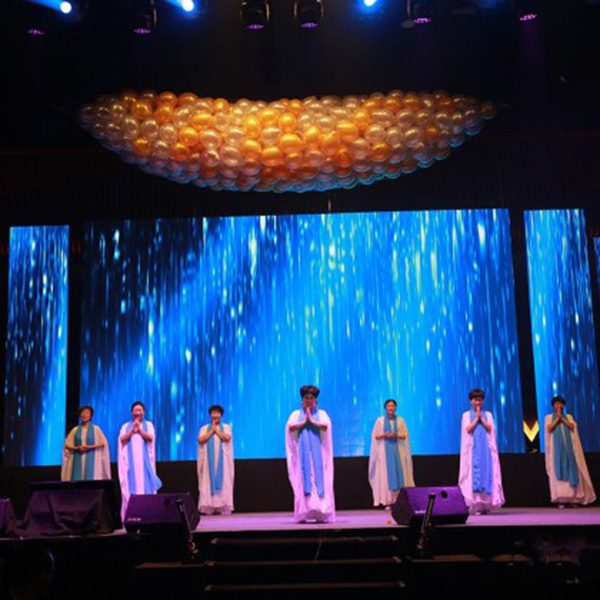
LED Screen

LED screens are the backbone of most modern launch events. Their brightness, flexibility, and seamless modular design make them ideal for both indoor and outdoor activations.

With fine pixel pitch and vivid colour reproduction, they ensure your visuals remain crisp and engaging even in challenging lighting conditions. Whether used as a full backdrop, branded stage element, or feature wall, LED displays instantly elevate production value.

Video Walls for Launch Events

When scale and immersion matter, video walls deliver. These expansive displays create an impressive visual canvas that can combine live footage, motion graphics, and promotional content in real time.

They’re particularly effective for large venues or hybrid launches, allowing remote audiences to experience the same impact as those onsite.

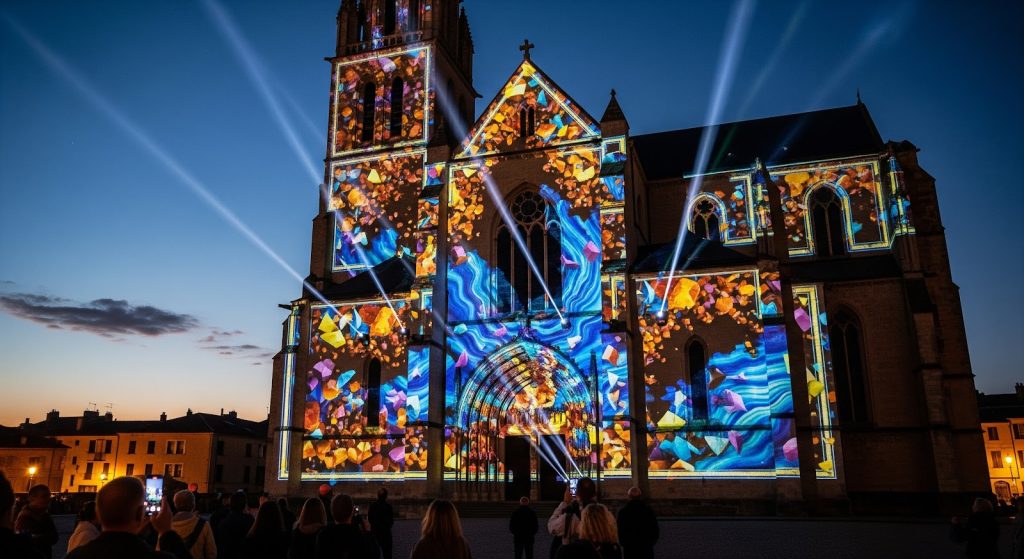
Projection Mapping

projection mapping

For launches where creativity takes centre stage, projection mapping transforms ordinary spaces into extraordinary storytelling surfaces.

Buildings, cars, or product models become animated canvases, revealing features, narratives, and emotions through light and motion. Projection mapping is ideal for unveiling flagship products or highlighting innovation in a memorable way.

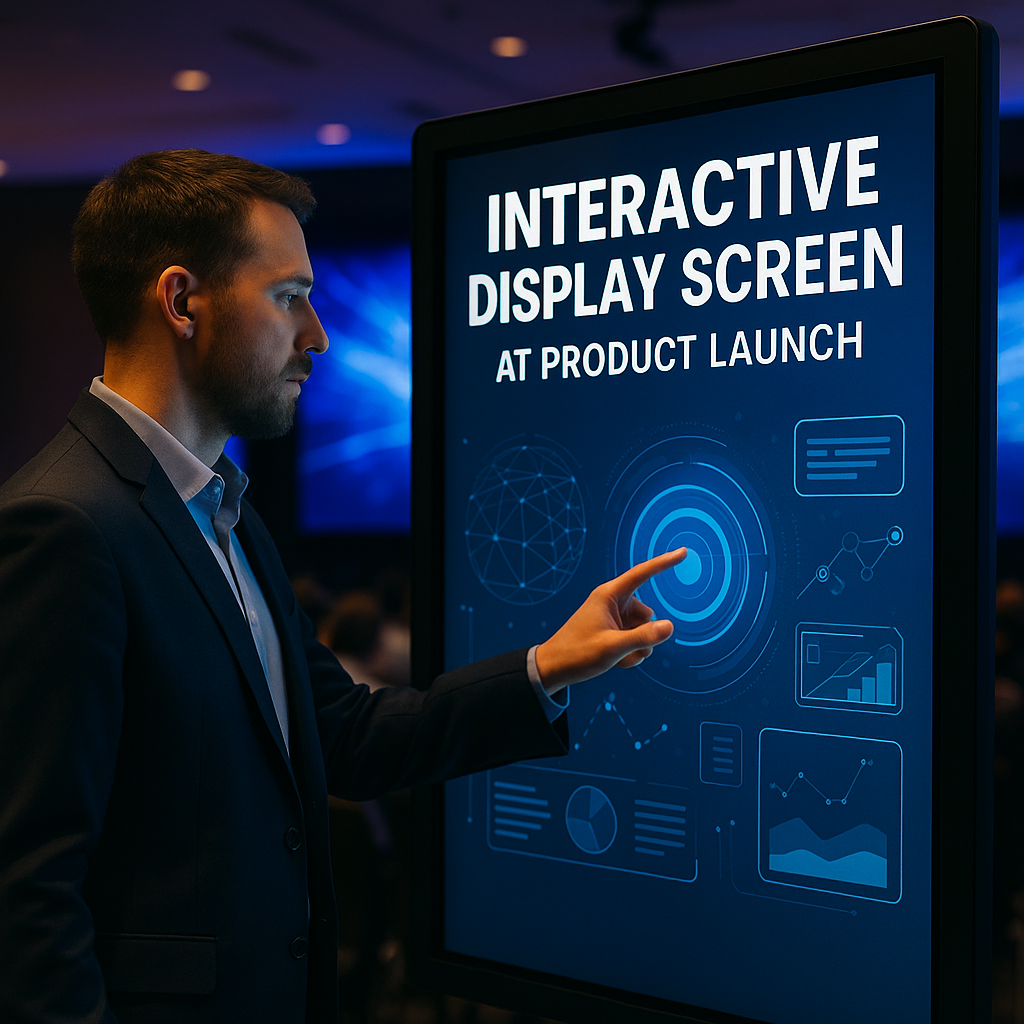
Interactive Display Screen Options

interactive display screen
Interactive display screen

Engagement is everything. Interactive display screens—whether touch, gesture, or mobile-linked—encourage attendees to explore, learn, and interact directly with your brand.

From gamified experiences to digital product demos, interactivity turns passive viewers into active participants and amplifies event buzz on social media.

Together, these event display solutions bring energy, sophistication, and measurable engagement to any product launch—ensuring that your message doesn’t just reach your audience but resonates with them.

Choosing the Right Visual Display Unit (VDU)

Selecting the right visual display unit for your event is about more than just screen size. It’s a technical decision that affects clarity, impact, and audience engagement. The ideal setup depends on viewing distance, venue lighting, and the type of content you’re presenting.

Pixel Pitch & Viewing Distance (Visual Screen Display Basics)

Pixel pitch determines image sharpness. For close-up viewing, such as VIP or indoor product demos, choose a fine pitch between 1–2mm.

For medium to large audiences, a 3–5mm pitch provides excellent resolution without unnecessary cost. A smaller pitch equals smoother, more detailed visuals—essential for premium visual screen displays.

Brightness, Contrast & Color

Indoor LED walls typically range from 800–1,500 nits, while outdoor LED screens for event launches should exceed 3,000 nits to stay bright in daylight. Balanced contrast and accurate colour calibration ensure your product visuals appear true-to-life, even under stage lighting.

Screen Format and Setup

Plan your event display solutions around content. Standard 16:9 displays work well for video, but ultra-wide or curved screens offer cinematic impact for storytelling. Always match your screen’s technical specs with your product AV launch equipment for seamless playback.

Content That Engages Audience on Launch Day

Even the most advanced visual display setup needs powerful content to capture attention. On launch day, the goal is to combine storytelling, motion, and interactivity to keep audiences engaged from the first frame to the final reveal.

Storytelling That Connects

Every launch should have a clear narrative arc—product launches that perform best open with intrigue, build anticipation, and end with a strong visual payoff. Use bold typography, brand colours, and emotive sound design to reinforce key messages.

Motion Design and Visual Rhythm

Short, looping segments (5–10 seconds) work best for event display solutions like video walls and interactive display screens. Use kinetic typography, animated icons, and light transitions to keep energy high without overwhelming the viewer.

Real-Time and Interactive Elements

Incorporate social media feeds, live polls, or AR-triggered content into your LED screens for event launches. Interactivity drives longer dwell time and encourages attendees to share experiences online—turning your display into an amplification tool.

When visuals are purposeful, rhythmic, and responsive, your visual display unit becomes more than a screen—it becomes the heartbeat of your launch.

Logistics & Risk-Control for LED Screens at Events

Behind every flawless launch is detailed planning. Managing LED screens for event launches involves more than setup—it’s about ensuring safety, reliability, and visual consistency from rehearsal to reveal.

Site & Rigging

Before installation, assess stage weight limits, truss capacity, and audience sightlines. Ground-supported structures work best for temporary or outdoor sites, while flown rigs create clean, elevated visuals indoors. Always coordinate with certified riggers to ensure visual display units are secure and aligned.

Power & Signal Management

A stable power supply is critical. Use dedicated circuits and include backup power sources such as UPS systems or generators. Route signal cables separately from power lines to prevent interference, and test redundancy paths for every event display solution.

Content & Playback QA

Schedule a full technical rehearsal. Check playback resolutions, colour balance, and brightness levels for consistency across your video walls or interactive display screens.

Calibrate each LED panel to avoid mismatched tones, and perform an on-site glare test if outdoors.

By planning for safety and contingencies, you ensure your visual display performs flawlessly—delivering high impact without risk.

Measurement: Proving Visual Display Impact

A great visual display doesn’t just look impressive—it delivers measurable results. Tracking the impact of your screens and content helps prove the value of your event display solutions and guides future improvements.

On-Site Engagement

Start by observing how people interact. Do they stop to watch? Take photos? Use QR codes or touchscreens?

Simple tools like heat-mapping cameras or footfall counters can show how many people engaged with your LED screens for event launches or interactive display screens.

Digital Reach

Visual content often extends far beyond the event itself. Track hashtags, mentions, and reposts of your video walls or projection mapping moments on social media. Each share expands your audience and builds buzz long after launch day.

Conversions & Feedback

If your goal is leads or sales, connect your visual display unit engagement to form fills, app downloads, or sign-ups. Post-event surveys and online polls can reveal how memorable or informative the display felt to attendees.

By measuring visibility, engagement, and conversion, you can prove that your visual display didn’t just entertain—it made an impact worth repeating.

Implementation Checklist

To make sure your visual display strategy runs smoothly, follow this quick step-by-step guide:

  • Set clear objectives: Define what success looks like—brand awareness, social engagement, or direct conversions.
  • Choose your event display solutions: Match LED screens, video walls, or projection mapping to your venue, audience size, and theme.
  • Plan your content early: Design visuals to fit your screen’s size, resolution, and aspect ratio. Include short loops, branded graphics, and clear messaging.
  • Coordinate product AV launch equipment: Confirm compatibility between playback systems, media servers, and your visual display units to avoid tech issues.
  • Test and rehearse: Run full playback checks, test brightness levels, and ensure power backup systems are in place.
  • Measure engagement: Track audience interactions, social media activity, and leads generated to assess overall impact.

With solid planning and creative execution, your visual display can transform a launch into a memorable experience that drives excitement and measurable results.

Working with a Visual Display Artist

A successful launch doesn’t just rely on great technology—it relies on creative vision. Partnering with a skilled visual display artist or engaging and event company’s launching services ensures that your screens, projections, and lighting work together to deliver a cohesive story.

These artists specialise in merging brand identity with visual innovation. From animated stage backdrops to projection mapping sequences, they translate product features into visual moments that command attention. Their work bridges design and technology, aligning every visual display unit and LED screen with your brand narrative.

When engaging a visual display artist, start early in the planning process. Share your event objectives, key messages, and technical specs for your product AV launch equipment. This collaboration helps ensure your content is designed to the correct pixel dimensions, colour space, and aspect ratio—avoiding costly reworks later.

A strong creative partnership, transforms your event display solutions from functional to unforgettable—turning light, motion, and sound into an immersive story that defines your product launch.

FAQs

What size LED screen is best for a product launch?

The ideal screen size depends on how far your audience will be from the display. For smaller indoor venues, a fine-pitch LED wall of around 3–5 metres wide usually works well.

For larger or outdoor events, go bigger—10 metres or more—so visuals stay sharp and readable. The key is matching pixel pitch and brightness to your venue’s scale and lighting.

Are video walls or projection mapping better for reveals?

Both are great options, but they serve different goals. Video walls provide bright, high-resolution visuals—perfect for product demos or live feeds.

Projection mapping transforms objects or buildings into moving canvases, ideal for storytelling or dramatic reveals. Many brands combine both for maximum effect.

How bright should outdoor LED screens be?

Outdoor LED screens for event launches should reach at least 3,000 nits of brightness to stay visible in daylight. For direct sunlight, 4,000 nits or higher ensures clear, vibrant images.

Do interactive display screens really increase engagement?

Yes. Interactive display screens encourage participation—through touch, motion, or mobile interaction. This involvement increases attention span, strengthens brand recall, and generates shareable moments on social media.

What is a visual display unit (VDU) in event production?

A visual display unit is any screen, LED wall, or projector that shows your event content. It’s the hardware that brings your visuals to life, connecting your product AV launch equipment with the audience.

Conclusion

In an age where first impressions shape brand perception, using visual display technology effectively can turn a product launch into a landmark event. From LED screens and video walls to interactive display screens and projection mapping, these tools combine creativity and innovation to engage audiences on every level.

By planning carefully, collaborating with a visual display artist, and measuring your results, you can ensure every moment on screen supports your message and strengthens your brand impact.

Ready to elevate your next launch? Explore Rental Supplier’s event display solutions and product AV launch equipment to bring your vision to life with clarity, energy, and unforgettable visuals.

For more, read 15 Launching Gimmicks That Will Leave Your Audience Mesmerised and How To Create an Unforgettable Experience With LED Screens in Events