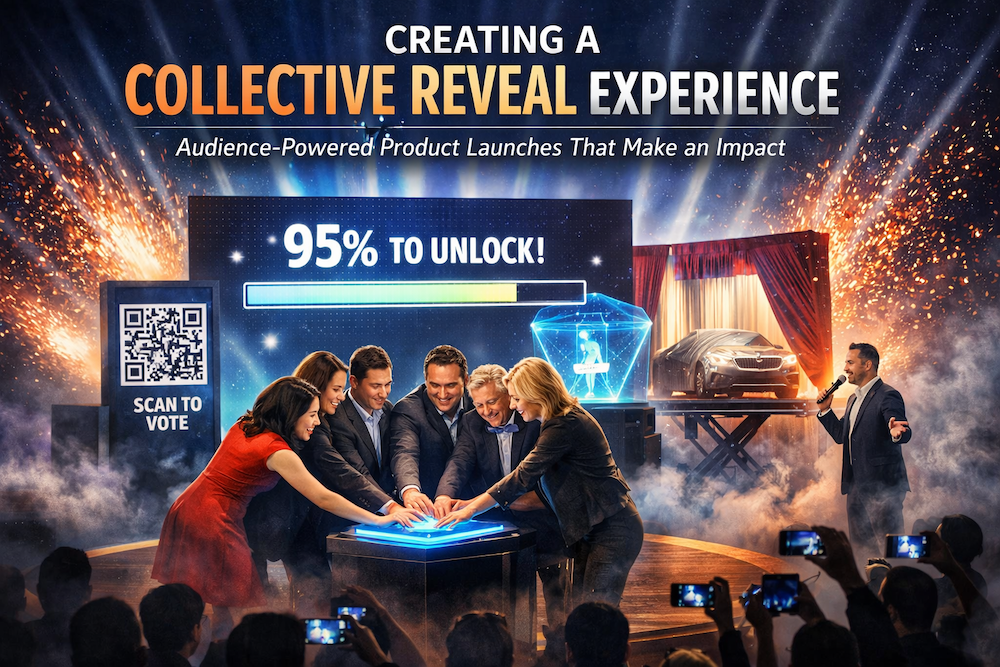
Interactive Launch Gimmicks: Engaging Your Audience Beyond the Reveal Moment

Key Takeaways

  • An interactive launch gimmick turns a product reveal into an audience-triggered moment, making guests feel like they helped create the launch instead of simply watching it.
  • The most effective interactive formats include touch-to-reveal launches, phone-based audience participation events, and gamified product launches that unlock the reveal through steps.
  • Participation increases emotional attachment because people value outcomes more when they contribute effort, leading to stronger memory and higher engagement.
  • Strong launches focus on three outcomes: remember, share, and advocate, which directly supports post-event marketing reach.
  • For maximum impact, combine LED progress visuals, a physical reveal system like Kabuki or hydraulic lifts, and a final effect like confetti for a complete reveal payoff.

What if your audience didn’t just watch your product launch, but they triggered it? Imagine 500 people pressing a button together, raising their phones in unison, or completing a simple challenge that unlocks the reveal. In that moment, they don’t just witness the launch. They own it.

That is why brands are shifting from launching at audiences to launching with them. A well-designed interactive launch gimmick turns passive attendees into active participants through touch-to-reveal moments, audience participation, and gamified mechanics.

The result is stronger emotional impact, higher engagement, and a launch experience people remember, share, and talk about long after the event ends.

What is an interactive launch gimmick?
Key Takeaways An interactive launch gimmick turns a product reveal into an audience-triggered moment, making guests feel like they helped create the launch instead of simply watching it. The most effective interactive formats include touch-to-reveal launches, phone-based audience participation events, and gamified product launches that unlock the reveal through steps. Participation increases emotional attachment because people value outcomes more when they contribute effort, leading to stronger memory and higher engagement. Strong launches focus on three outcomes: remember, share, and advocate, which directly supports post-event marketing reach. For maximum impact, combine LED progress visuals, a physical reveal system like Kabuki or hydraulic lifts, and a final effect like confetti for a complete reveal payoff. What if your audience didn’t just watch your product launch, but they triggered it? Imagine 500 people pressing a button together, raising their phones in unison, or completing a simple challenge that unlocks the reveal. In that moment, they don’t just witness the launch. They own it. That is why brands are shifting from launching at audiences to launching with them. A well-designed interactive launch gimmick turns passive attendees into active participants through touch-to-reveal moments, audience participation, and gamified mechanics. The result is stronger emotional impact, higher engagement, and a launch experience people remember, share, and talk about long after the event ends. What is an interactive launch gimmick? Image: Interactive launch gimmicks An interactive launch gimmick is a product reveal mechanism where the audience actively triggers the launch moment instead of passively watching it. It turns the reveal into a shared action, making attendees feel involved, emotionally invested, and more likely to remember and share the experience. This approach is becoming more important because audiences expect experiences, not presentations. Interactive reveals also create stronger social media moments because people want to post what they helped create. Common examples include: Touch-to-reveal launch where multiple guests place their hands on a device to activate the reveal Audience participation event where attendees scan a QR code or vote live to unlock the next stage Gamified product launch where the reveal is unlocked through challenges, countdown goals, or team-based actions The psychology of participation (the “IKEA effect” for events) Interactive launches work because effort creates attachment. When people contribute—even through a small action—they value the outcome more. This is the same idea behind the “IKEA effect,” where individuals feel more ownership over something they helped build. In events, that sense of contribution increases emotional impact. The reveal becomes a personal memory, not just a visual moment. This leads to higher engagement, stronger recall, and more organic sharing because attendees feel like the launch was partly theirs. From “Launch at them” to “Launch with them”: The new experiential launch playbook Passive reveals create spectators; interactive product launch creates stakeholders. For years, product launches followed a familiar script: a speech, a countdown, a stage button, and a burst of confetti. The audience watched. The brand acted. The moment belonged to the people on stage. That model still works visually, but it no longer guarantees impact. An interactive product launch changes the dynamic. Instead of a CEO pressing a single button, the audience becomes the trigger. They place their hands on a touch device. They scan to activate a sequence. They complete a challenge that unlocks the reveal. The energy shifts from “watch this” to “we did this together.” When the crowd collectively activates the moment, they stop being spectators. They become stakeholders in the experience. That difference changes how the launch is remembered and talked about afterward. The 3 outcomes you’re optimizing for: remember, share, advocate A strong experiential launch is designed for three clear outcomes: Memory: Multi-sensory impact combined with personal contribution creates stronger recall. Sharing: “I triggered it” is powerful social proof. People share moments they helped create. Advocacy: Emotional investment increases brand attachment and post-event support. Launching with your audience turns a reveal into a shared achievement, and shared achievements travel further. 3 core formats that make interactive product launch feel participatory Interactive launches work best when the audience has a clear role in making the reveal happen. These three proven formats (touch-to-reveal, audience-driven interaction, and gamification) turn a standard product launch into a collective experience people feel proud to be part of. 1) Touch-to-reveal launch (the “human switch” moment) A touch-to-reveal launch turns people into the activation mechanism. The principle is simple: many hands → one outcome. Why it works: Creates a visible, unified trigger moment Builds anticipation through physical involvement Produces strong photo and video content Easy for audiences to understand instantly Instead of one executive pressing a button, multiple participants place their hands on a device together. When the system activates, the reveal feels earned, not delivered. Launching gimminks that support this format include: Hand Touch Launching Gimmick (Palm Light / touch pedestal) for a staged multi-person activation moment Digital Touch Screen Display for tap-to-unlock animations, product feature reveals, or countdown triggers For maximum impact, position the device front and center. Choose a touchpoint that’s visible on camera. 2) Audience participation event mechanics (scan, vote, sync) In this format, the audience uses their own devices to control the launch. Phones become controllers instead of distractions. Core participation mechanics: Scan to activate Vote to determine outcomes Sync actions to reach a target goal Collective countdown unlock Why it works: Scales easily for small or large crowds Makes every attendee feel included Creates real-time anticipation Shows live progress toward a shared objective Some solutions that fit this format: Hand scanner gimmick for a “scan to activate” reveal flow Projection mapping projector where live voting determines what appears on stage or building surfaces Hologram for a futuristic second-layer reveal once participation goals are met Keep instructions simple, show progress clearly and deliver instant feedback. 3) Gamified product launch (unlock → reveal → reward) A gamified product launch structures the reveal as a challenge. The audience must complete steps before unlocking the final moment. Typical structure: Set a goal Track progress live Unlock milestone Deliver final reveal Gamification increases engagement because: It builds momentum It creates friendly competition It turns the reveal into a reward It encourages sustained attention Some elements that support staged progression: Launching gimmick box / Magic box as the physical “final unlock” Light box for branded level markers or clue reveals Plasma ball for dramatic energy build-up in darker environments When the audience works toward a reveal, the launch becomes a shared achievement—not just a scheduled announcement. Best interactive elements for big visual payoff (LED + stage reveals) An interactive launch must look as powerful as it feels. Participation creates emotional impact, but strong visuals turn that moment into something cinematic. When digital screens, stage mechanics, and special effects work together, the reveal becomes impossible to ignore, and impossible not to record. Interactive LED wall event moments (What to show on screen) An interactive LED wall event adds scale and clarity to audience participation. It ensures everyone can see the progress, the trigger, and the payoff. Here’s what works best on screen: Live progress meters that fill up as the audience scans, taps, or votes Real-time participant names or team displays to create friendly competition Countdown timers tied directly to audience activity “Unlock” animations that activate the moment the participation goal is met LED walls are most effective when connected to live inputs from phones, tablets, scanners, or touch devices. The audience performs an action. The screen responds instantly, building anticipation and keeping energy high. The key is synchronization. The animation, lighting, and physical reveal must trigger at the exact same moment. When everything fires together, the payoff feels intentional and powerful. Layer your reveal: Physical + visual + special effects The most memorable launches combine multiple layers of impact. Start with the visual build-up on LED screens. Then add a physical reveal mechanism such as the Kabuki Launching System, which drops a curtain instantly to unveil the product. For elevated staging, the Hydraulic Launching System can lift a prop, product model, or symbolic key into view. Finally, punctuate the moment with atmosphere. A Giant Confetti Cannon delivers instant celebration energy. Many launches also combine confetti with lighting effects or synchronized stage cues to amplify the impact. When digital visuals, physical movement, and special effects trigger together, the audience don’t just see the launch, they feel it. Run an audience participation event without technical chaos: A checklist An audience participation event can create massive energy, but only if execution is smooth. If the audience is confused, the moment slows down. If the trigger fails, the excitement collapses. Interactive launches must be designed for real crowds, real timing, and real technical risk. The good news is that most problems can be avoided with a simple checklist. Crowd flow + safety + redundancy Interactive reveals should feel effortless for attendees. That requires planning around movement, timing, and backup control. Key execution rules: Rehearse the trigger moment with your crew and equipment exactly as it will happen live Test the full sequence including lighting, audio, screens, and special effects Define a “Plan B trigger” so the MC or stage manager can activate the reveal manually if needed Control crowd flow so participants know where to stand and when to act Keep instructions ultra-short such as “Place your hand here,” “Scan now,” or “Tap to unlock” Avoid long explanations. The audience should understand the action in seconds. Also, keep safety in mind. Do not place interactive devices where crowds will rush forward. Use barriers or stage markers if needed, especially when cameras are involved. Camera-first staging (So it spreads) A successful interactive launch is not only designed for the room. It is designed for social sharing. To make the moment spread: Place the interactive device where phones can capture it clearly from the crowd. Ensure the reveal happens at a strong visual focal point (center stage or front-facing). Make sure the “before and after” is obvious on screen. Ensure the moment reads in 1–2 seconds on video. If the reveal looks clear and dramatic in a short clip, people will post it instantly. That is where the real marketing begins. Where to rent interactive launching gimmicks? Choosing the right interactive launch gimmick depends on how you want your audience to participate and what kind of visual impact you want to create. Below are Rental Supplier’s options grouped by use-case to help you design a stronger interactive product launch. Best for touch-to-reveal launch These options are ideal when you want the audience to physically trigger the reveal: Digital Touch Screen Display: Perfect for tap-to-unlock sequences, feature reveals, countdown activations, and interactive animations. Works well for corporate launches, mall activations, and tech showcases. Hand Touch Launching Gimmick (Palm Light): Designed for multi-person activation moments. Several VIPs or stakeholders place their hands on the device together to trigger the reveal. Highly visual and ideal for stage photography. Best for dramatic physical reveal These gimmicks create a strong stage impact when the product needs a bold unveiling moment. Kabuki Launching System: Instantly drops a curtain to reveal the product. Clean, dramatic, and highly effective for large-stage launches. Hydraulic Launching Gimmick System Lifts a product, prop, or symbolic key into view. Adds movement and height for stronger visual payoff. Launching Gimmick Box / Magic Box: Acts as the final “unlock” moment in gamified launches. The box opens to reveal the product after participation goals are met. Best for futuristic / experiential marketing visuals These elements elevate your launch into a high-tech experiential marketing moment. Hologram: Creates a futuristic layered reveal effect. Ideal for tech, automotive, and innovation-driven brands. Projection Mapping Projector: Transforms surfaces into dynamic storytelling displays. Great for vote-based or interactive LED wall events. Light Box or Plasma Ball: Adds dramatic lighting and energy build-up. Works well in darker environments to amplify anticipation. The right combination turns a standard reveal into a true collective reveal experience. FAQ What’s the best touch-to-reveal launch idea for corporate events? The best touch-to-reveal concept is a multi-person activation moment, where VIPs or key stakeholders place their hands together to trigger the reveal. Tools like a Palm Light hand-touch launching gimmick or a touchscreen display work well because they look professional and create strong photo opportunities. How do you run a gamified product launch without an app? You can run a gamified product launch using QR codes, simple web voting, and stage-based progress tracking on an LED wall. Set a clear goal, show live progress, and unlock the final reveal once the crowd hits the target. The key is simplicity and instant feedback. Which launch gimmicks work best for indoor vs outdoor launches? Indoor launches work best with controlled visuals like Kabuki curtain drops, holograms, touch devices, and projection mapping. Outdoor launches benefit from large-scale elements like projection mapping on buildings, hydraulic lifts, and high-impact effects such as confetti cannons. The venue size and lighting conditions matter most. How many people should participate in an audience-triggered reveal? For maximum impact, aim for at least 5 to 10 people on stage or 50+ participants in the crowd. The reveal feels more powerful when it looks collective. Large participation also increases excitement and improves the chance of guests recording and sharing the moment. How do you prevent confusion during an audience participation event? Keep instructions ultra-short and visual. Use clear on-screen prompts, a live progress meter, and an MC guiding the action. Always rehearse the trigger moment and prepare a manual backup trigger so the reveal happens smoothly even if participation slows down. Conclusion A powerful launch is no longer about who stands on stage. It is about who activates the moment. When you shift from launching at your audience to launching with them, the energy changes. Touch-to-reveal triggers, live participation mechanics, and gamified unlock sequences turn a standard product introduction into a collective reveal experience. People remember what they help create. They share what they feel part of. And they advocate for moments they helped bring to life. An effective interactive launch gimmick is not just a stage prop. It is a participation strategy. When designed correctly your launch becomes more than an announcement. It becomes a shared achievement. international launch gimmick

Image: Interactive launch gimmicks

An interactive launch gimmick is a product reveal mechanism where the audience actively triggers the launch moment instead of passively watching it. It turns the reveal into a shared action, making attendees feel involved, emotionally invested, and more likely to remember and share the experience.

This approach is becoming more important because audiences expect experiences, not presentations. Interactive reveals also create stronger social media moments because people want to post what they helped create.

Common examples include:

  • Touch-to-reveal launch where multiple guests place their hands on a device to activate the reveal
  • Audience participation event where attendees scan a QR code or vote live to unlock the next stage
  • Gamified product launch where the reveal is unlocked through challenges, countdown goals, or team-based actions

The psychology of participation (the “IKEA effect” for events)

Interactive launches work because effort creates attachment. When people contribute—even through a small action—they value the outcome more. This is the same idea behind the “IKEA effect,” where individuals feel more ownership over something they helped build.

In events, that sense of contribution increases emotional impact. The reveal becomes a personal memory, not just a visual moment. This leads to higher engagement, stronger recall, and more organic sharing because attendees feel like the launch was partly theirs.

From “Launch at them” to “Launch with them”: The new experiential launch playbook

Passive reveals create spectators; interactive product launch creates stakeholders.

For years, product launches followed a familiar script: a speech, a countdown, a stage button, and a burst of confetti. The audience watched. The brand acted. The moment belonged to the people on stage.

That model still works visually, but it no longer guarantees impact.

An interactive product launch changes the dynamic. Instead of a CEO pressing a single button, the audience becomes the trigger. They place their hands on a touch device. They scan to activate a sequence. They complete a challenge that unlocks the reveal. The energy shifts from “watch this” to “we did this together.”

When the crowd collectively activates the moment, they stop being spectators. They become stakeholders in the experience. That difference changes how the launch is remembered and talked about afterward.

The 3 outcomes you’re optimizing for: remember, share, advocate

A strong experiential launch is designed for three clear outcomes:

  • Memory: Multi-sensory impact combined with personal contribution creates stronger recall.
  • Sharing: “I triggered it” is powerful social proof. People share moments they helped create.
  • Advocacy: Emotional investment increases brand attachment and post-event support.

Launching with your audience turns a reveal into a shared achievement, and shared achievements travel further.

3 core formats that make interactive product launch feel participatory

Interactive launches work best when the audience has a clear role in making the reveal happen. These three proven formats (touch-to-reveal, audience-driven interaction, and gamification) turn a standard product launch into a collective experience people feel proud to be part of.

1) Touch-to-reveal launch (the “human switch” moment)

A touch-to-reveal launch turns people into the activation mechanism. The principle is simple: many hands → one outcome.

Why it works:

  • Creates a visible, unified trigger moment
  • Builds anticipation through physical involvement
  • Produces strong photo and video content
  • Easy for audiences to understand instantly

Instead of one executive pressing a button, multiple participants place their hands on a device together. When the system activates, the reveal feels earned, not delivered.

Launching gimminks that support this format include:

For maximum impact, position the device front and center. Choose a touchpoint that’s visible on camera.

2) Audience participation event mechanics (scan, vote, sync)

In this format, the audience uses their own devices to control the launch. Phones become controllers instead of distractions.

Core participation mechanics:

  • Scan to activate
  • Vote to determine outcomes
  • Sync actions to reach a target goal
  • Collective countdown unlock

Why it works:

  • Scales easily for small or large crowds
  • Makes every attendee feel included
  • Creates real-time anticipation
  • Shows live progress toward a shared objective

Some solutions that fit this format:

Keep instructions simple, show progress clearly and deliver instant feedback.

3) Gamified product launch (unlock → reveal → reward)

A gamified product launch structures the reveal as a challenge. The audience must complete steps before unlocking the final moment.

Typical structure:

  1. Set a goal
  2. Track progress live
  3. Unlock milestone
  4. Deliver final reveal

Gamification increases engagement because:

  • It builds momentum
  • It creates friendly competition
  • It turns the reveal into a reward
  • It encourages sustained attention

Some elements that support staged progression:

When the audience works toward a reveal, the launch becomes a shared achievement—not just a scheduled announcement.

Best interactive elements for big visual payoff (LED + stage reveals)

An interactive launch must look as powerful as it feels. Participation creates emotional impact, but strong visuals turn that moment into something cinematic. When digital screens, stage mechanics, and special effects work together, the reveal becomes impossible to ignore, and impossible not to record.

Interactive LED wall event moments (What to show on screen)

An interactive LED wall event adds scale and clarity to audience participation. It ensures everyone can see the progress, the trigger, and the payoff.

Here’s what works best on screen:

  • Live progress meters that fill up as the audience scans, taps, or votes
  • Real-time participant names or team displays to create friendly competition
  • Countdown timers tied directly to audience activity
  • “Unlock” animations that activate the moment the participation goal is met

LED walls are most effective when connected to live inputs from phones, tablets, scanners, or touch devices. The audience performs an action. The screen responds instantly, building anticipation and keeping energy high.

The key is synchronization. The animation, lighting, and physical reveal must trigger at the exact same moment. When everything fires together, the payoff feels intentional and powerful.

Layer your reveal: Physical + visual + special effects

The most memorable launches combine multiple layers of impact.

Start with the visual build-up on LED screens. Then add a physical reveal mechanism such as the Kabuki Launching System, which drops a curtain instantly to unveil the product. For elevated staging, the Hydraulic Launching System can lift a prop, product model, or symbolic key into view.

Finally, punctuate the moment with atmosphere. A Giant Confetti Cannon delivers instant celebration energy. Many launches also combine confetti with lighting effects or synchronized stage cues to amplify the impact.

When digital visuals, physical movement, and special effects trigger together, the audience don’t just see the launch, they feel it. Run an audience participation event without technical chaos: A checklist

An audience participation event can create massive energy, but only if execution is smooth. If the audience is confused, the moment slows down. If the trigger fails, the excitement collapses. Interactive launches must be designed for real crowds, real timing, and real technical risk.

The good news is that most problems can be avoided with a simple checklist.

Crowd flow + safety + redundancy

Interactive reveals should feel effortless for attendees. That requires planning around movement, timing, and backup control.

Key execution rules:

  • Rehearse the trigger moment with your crew and equipment exactly as it will happen live
  • Test the full sequence including lighting, audio, screens, and special effects
  • Define a “Plan B trigger” so the MC or stage manager can activate the reveal manually if needed
  • Control crowd flow so participants know where to stand and when to act
  • Keep instructions ultra-short such as “Place your hand here,” “Scan now,” or “Tap to unlock”

Avoid long explanations. The audience should understand the action in seconds. Also, keep safety in mind. Do not place interactive devices where crowds will rush forward. Use barriers or stage markers if needed, especially when cameras are involved.

Camera-first staging (So it spreads)

A successful interactive launch is not only designed for the room. It is designed for social sharing.

To make the moment spread:

  • Place the interactive device where phones can capture it clearly from the crowd.
  • Ensure the reveal happens at a strong visual focal point (center stage or front-facing).
  • Make sure the “before and after” is obvious on screen.
  • Ensure the moment reads in 1–2 seconds on video.

If the reveal looks clear and dramatic in a short clip, people will post it instantly. That is where the real marketing begins.

Where to rent interactive launching gimmicks?

Choosing the right interactive launch gimmick depends on how you want your audience to participate and what kind of visual impact you want to create. Below are Rental Supplier’s options grouped by use-case to help you design a stronger interactive product launch.

Best for touch-to-reveal launch

These options are ideal when you want the audience to physically trigger the reveal:

  • Digital Touch Screen Display: Perfect for tap-to-unlock sequences, feature reveals, countdown activations, and interactive animations. Works well for corporate launches, mall activations, and tech showcases.
  • Hand Touch Launching Gimmick (Palm Light): Designed for multi-person activation moments. Several VIPs or stakeholders place their hands on the device together to trigger the reveal. Highly visual and ideal for stage photography.

Best for dramatic physical reveal

These gimmicks create a strong stage impact when the product needs a bold unveiling moment.

Best for futuristic / experiential marketing visuals

These elements elevate your launch into a high-tech experiential marketing moment.

  • Hologram: Creates a futuristic layered reveal effect. Ideal for tech, automotive, and innovation-driven brands.
  • Projection Mapping Projector: Transforms surfaces into dynamic storytelling displays. Great for vote-based or interactive LED wall events.
  • Light Box or Plasma Ball: Adds dramatic lighting and energy build-up. Works well in darker environments to amplify anticipation.

The right combination turns a standard reveal into a true collective reveal experience.

FAQ

What’s the best touch-to-reveal launch idea for corporate events?

The best touch-to-reveal concept is a multi-person activation moment, where VIPs or key stakeholders place their hands together to trigger the reveal. Tools like a Palm Light hand-touch launching gimmick or a touchscreen display work well because they look professional and create strong photo opportunities.

How do you run a gamified product launch without an app?

You can run a gamified product launch using QR codes, simple web voting, and stage-based progress tracking on an LED wall. Set a clear goal, show live progress, and unlock the final reveal once the crowd hits the target. The key is simplicity and instant feedback.

Which launch gimmicks work best for indoor vs outdoor launches?

Indoor launches work best with controlled visuals like Kabuki curtain drops, holograms, touch devices, and projection mapping.

Outdoor launches benefit from large-scale elements like projection mapping on buildings, hydraulic lifts, and high-impact effects such as confetti cannons. The venue size and lighting conditions matter most.

How many people should participate in an audience-triggered reveal?

For maximum impact, aim for at least 5 to 10 people on stage or 50+ participants in the crowd. The reveal feels more powerful when it looks collective. Large participation also increases excitement and improves the chance of guests recording and sharing the moment.

How do you prevent confusion during an audience participation event?

Keep instructions ultra-short and visual. Use clear on-screen prompts, a live progress meter, and an MC guiding the action. Always rehearse the trigger moment and prepare a manual backup trigger so the reveal happens smoothly even if participation slows down.

Conclusion

A powerful launch is no longer about who stands on stage. It is about who activates the moment.

When you shift from launching at your audience to launching with them, the energy changes. Touch-to-reveal triggers, live participation mechanics, and gamified unlock sequences turn a standard product introduction into a collective reveal experience. People remember what they help create. They share what they feel part of. And they advocate for moments they helped bring to life.

An effective interactive launch gimmick is not just a stage prop. It is a participation strategy. When designed correctly your launch becomes more than an announcement. It becomes a shared achievement.

If you are planning your next interactive product launch, focus on one goal: make the audience part of the trigger. The reveal will take care of itself.

Why Sound and Lighting Are Key To Successful Events

Key Takeaways

  • Sound and lighting are essential to how audiences experience an event, influencing clarity, focus, and emotional impact from start to finish.
  • When sound and light are integrated, events feel more structured, engaging, and professional, helping key moments stand out.
  • Good sound design ensures clear speech, balanced volume, and comfortable listening for all audience sizes and venues.
  • LED lighting and well-planned lighting layers add atmosphere depth and guide attention without overwhelming the space.
  • Different event types, such as corporate events, exhibition events, and outdoor and indoor events, require tailored sound and lighting strategies.
  • Renting professional sound and lighting provides flexibility, access to modern equipment, and reliable performance without the cost or complexity of ownership.

Sound & Lighting

Every successful event relies on two essentials: sound and lighting. No matter how well-planned a corporate event, exhibition event, or outdoor and indoor event may be, poor audio or flat lighting can instantly reduce engagement and professionalism. Clear sound ensures your message is heard, while effective lighting directs attention and sets the mood.

Together, sound and light shape the entire event experience. Through smart sound design and intentional lighting choices, event organizers can highlight key moments, build atmosphere depth, and create a seamless flow that keeps audiences focused. This natural integration is why sound and lighting are never treated separately in professional event production.

Why Sound and Lighting Go Together at Every Event

Sound and lighting work together to control focus, emotion, and flow at an event. When these elements are planned as a single system, they create a cohesive experience that feels professional, engaging, and intentional.

Sound and Lighting Shape Attention and Emotion

Sound ensures messages are heard clearly, while lighting guides where people look and how they emotionally respond to the space. Together, they help maintain focus, energy, and engagement throughout the event.
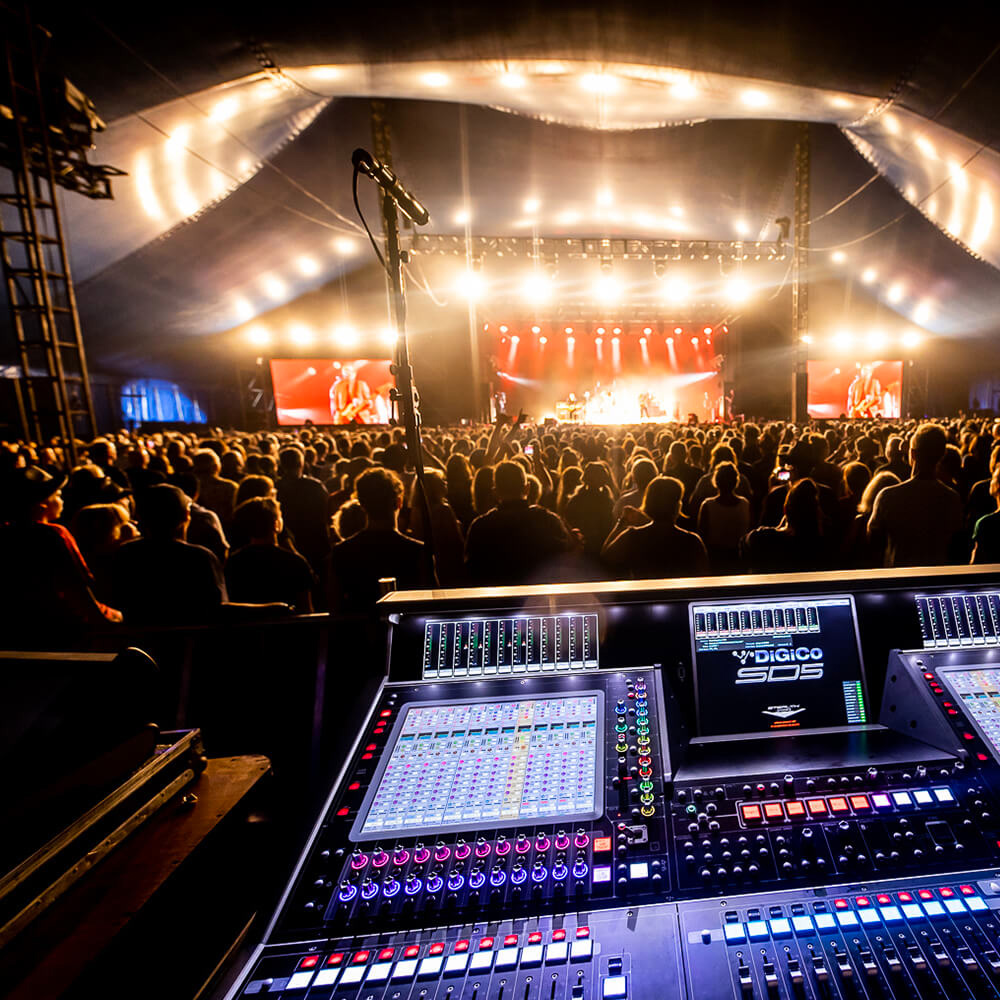
sound and lighting

Sound Tells the Story, Lighting Shows It

Sound delivers information through speech, music, and timing, while lighting visually reinforces that information. A well-lit speaker with clear audio feels confident and professional, while a product reveal supported by music and lighting feels intentional and impactful.

Coordinated Cues Create Powerful Key Moments

The most memorable moments happen when sound and lighting work in sync. Music cues paired with lighting changes, spotlighting timed with microphone activation, or brief blackouts before a reveal help emphasize key moments and leave a lasting impression.

The Role of Sound Design in Successful Events

Sound design is about more than volume. It focuses on clarity, balance, and comfort so audiences remain engaged without strain or distraction.

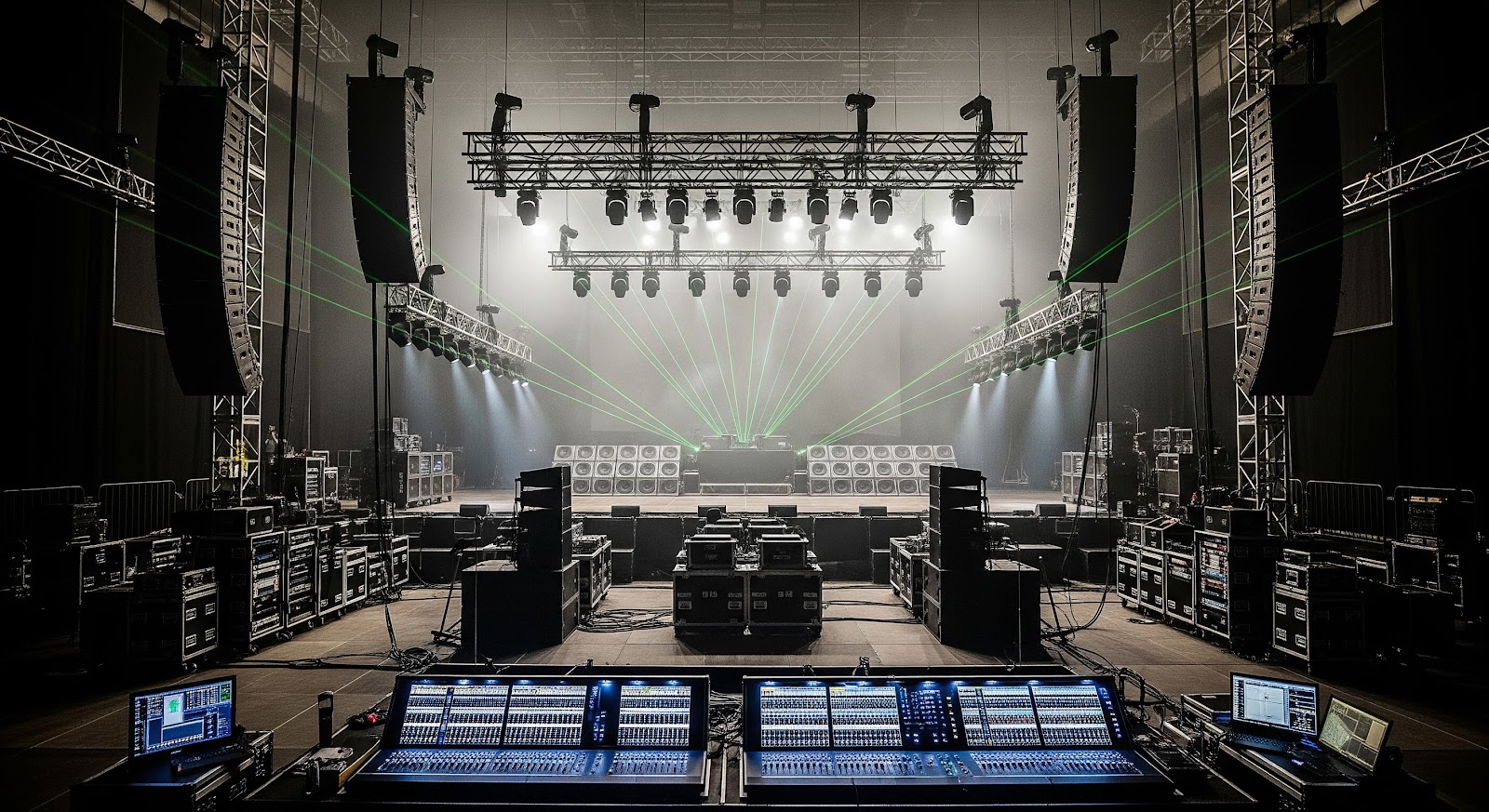
concert sound system

Clear Sound Design Keeps Audiences Engaged

Clear sound design ensures every word and cue is heard evenly across the venue. Choosing the right microphones, speaker placement, and audio levels prevents echo, feedback, and uneven volume.

Smooth transitions between speakers, videos, and music support the natural flow of an event, reinforcing credibility and professionalism.

Immersive Sound Transforms Events into Experiences

Immersive sound distributes audio in a natural, engaging way using ambient music, directional speakers, or layered zones. This approach is especially effective for exhibition events and brand activations, creating dynamic and memorable experiences.

How Lighting Creates Atmosphere Depth and Impact

Lighting defines how an event looks, feels, and flows. A well-planned lighting system adds depth, highlights focal points, and reinforces the event’s mood.

LED Lighting Builds Mood, Focus, and Atmosphere Depth

LED lighting uses color, intensity, and placement to transform venues and direct attention. Layered lighting prevents spaces from feeling flat while maintaining comfort and professionalism.

Special Effects Add Drama to Key Moments

Effects such as smoke machines and laser effects should be used sparingly. When paired with sound cues, they amplify product reveals, opening sequences, and finales without overwhelming the audience.

Sound and Lighting Strategies by Event Type

Corporate Event Sound and Lighting

Corporate events prioritize clarity and professionalism. Sound systems must deliver clear speech, while lighting supports branding and speaker visibility without distraction.

Exhibition Event Sound and Lighting

Exhibition events require focused sound and high-impact lighting. Directional audio avoids noise pollution, while accent lighting draws attention to products and displays.

Modular Exhibition Booth

Sound and Lighting for Outdoor and Indoor Events

Indoor events require careful acoustic tuning, while outdoor events demand weather protection, wider sound coverage, and lighting that remains visible in changing conditions.

Event Sound and Lighting Planning Checklist

Pre-Event Considerations

Define the event format, audience size, and key moments early. Confirm venue power, rigging, and restrictions to ensure the right equipment is selected.

On-Site Setup and Testing

Test speakers, microphones, lighting scenes, and transitions under real conditions. A full system check ensures smooth execution from start to finish.

Where to Rent Professional Sound and Lighting

How RentalSupplier Supports Successful Events

RentalSupplier provides professional sound and lighting solutions for corporate events, exhibitions, and indoor and outdoor events, delivering reliable performance and clear audio.

Why Renting Is Smarter Than Buying

Renting eliminates high upfront costs, maintenance, and storage challenges. It provides flexibility, modern equipment, and scalable solutions tailored to each event.

FAQ

Why are sound and lighting important for events?
They control how information is delivered and how audiences experience the event, ensuring clarity and atmosphere.

What type of sound system is best for a corporate event?
Systems that prioritize speech clarity, even coverage, and controlled volume.

What is sound design?
The planning and control of audio to ensure clarity, balance, and comfort.

What is immersive sound?
Audio that surrounds the audience rather than projecting from a single source.

Are special effects necessary?
No. They should only be used to enhance key moments.

Conclusion

Successful events depend on how content is experienced. When sound and lighting work together, they create clarity, focus, and atmosphere that elevate every moment.

From corporate presentations to exhibitions and outdoor events, the right sound and lighting setup ensures a professional, engaging experience. Renting professional equipment allows organizers to achieve high-quality results without unnecessary cost or complexity.